Let’s face it: if you have ever felt anxious, you know anxiety feels uncomfortable in the body, the mind and the heart. It can be physically debilitating and frightening, and while your body is in overdrive, you can’t think straight. Thoughts consume you, everything feels like it’s crashing down, and you can’t stop the chaos.
The truth is that anxiety is a symptom of something greater. Think of it as a warning sign: your mind and body are sending you a message that something deeper is happening. But while you’re feeling fear of the unknown and struggling to breathe, all you want is for the discomfort to go away.
You don’t need to know the root cause of your anxiety while you’re at the height of it. You need relief. In fact, trying to figure it out in the moment can work against you by increasing your anxiety. Think of it as anxiety inception: the fear of having anxiety causing more anxiety while you’re having anxiety. (Whew!)
So instead of trying to think your way through it, here are some tools to ease your symptoms first. You can explore the root causes later.
1. Breathe
You’ve probably heard this a million times, because it works. There are many ways to breathe to reduce anxiety. One of my favorites is the simple 1:2 breath, where your exhale is twice as long as your inhale. Sitting tall or standing, inhale for a count of 3 and exhale for a count of 6, counting in your mind.
2. Walk
Movement increases blood flow and decreases stress. Walking in nature can be even more beneficial: looking at trees, plants and flowers can help lower your heart rate.
3. Practice mindfulness
Think of mindfulness as awareness of the present moment. What is happening now? An easy way in is through your five senses. What do I see? What do I smell? What do I feel? What do I taste? What do I hear? Answering these questions brings you into the here and now.
4. Practice self-care, and talk to someone you trust
Schedule time in your day or week to take intentional action to care for your physical, mental and emotional self. This is your time to be selfish in a good way: get the massage you’ve been putting off, go for a run or take a midday nap. Whatever self-care looks like for you, do what feels good.
The support of a trusted friend, loved one or family member can also help you feel safe in the moment, and validated: understood, without fear of judgment.
5. Take a warm bath
A soothing warm bath can help relax the body and ease tension. Stir in Epsom salts, which contain magnesium, and add a few drops of lavender oil for an extra calming ritual.
6. Meditate
Meditation helps quiet an overactive mind. Don’t get caught up in the how. Just do it. Sit in a chair, or cross-legged on the floor if that’s comfortable. Commit to 2 minutes a day, and increase the time as you get more comfortable. Beginners can focus on one thing, like the breath or counting backward from 100. Thoughts will come and go, and that’s OK. Don’t try to push them away; simply practice refocusing your attention. Free apps like Insight Timer offer lots of guided meditations.
7. Take a yoga class
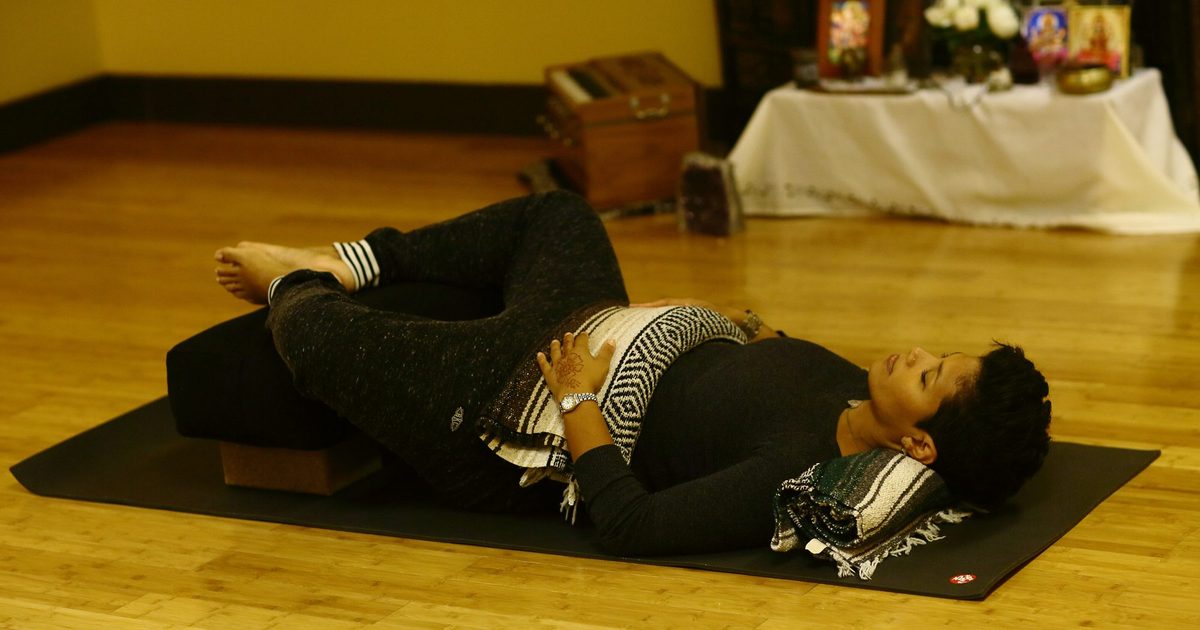
Yoga helps you stay calm and relaxed in daily life, and gives you strength to face stressors as they come. The practice engages the body through postures and breath, and the mind through meditation and mindfulness. Gentler styles to try include restorative yoga, yoga nidra, hatha and alignment-based classes.
A note on support
These tools can help you gain more control over anxiety symptoms, but they are support, not a long-term cure. If you live with ongoing anxiety, please consider more in-depth care, such as therapy with a licensed mental health professional. If you are ever in crisis in the United States, you can call or text 988, any time.
Here’s to living a healthy, happy life.


