The Practice of Sound

Kirtan

Sacred sound as practice. Voice as prayer. Community as instrument.

Call and response chanting from the yogic tradition. No experience needed. No beautiful voice required. Just presence, breath, and the willingness to sing together.

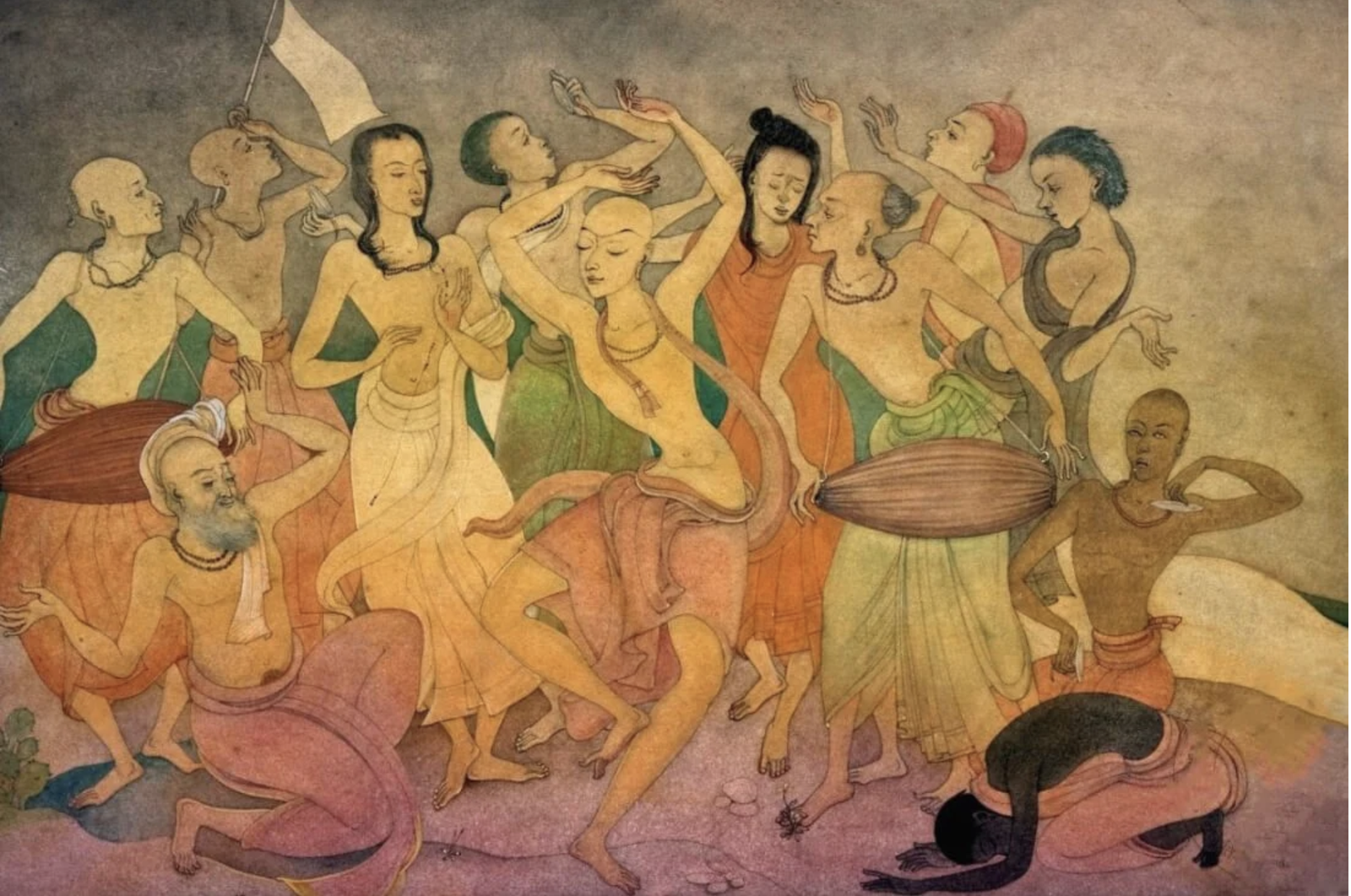
Chaytania Kirtana by Kshitindranath Mazumdar, Bengal School of Art
What Is Kirtan

Devotional
Chanting

Kirtan is one of the oldest continuous practices in the yogic tradition. It belongs to Bhakti Yoga, the path of devotion. The practice is simple: a teacher offers a mantra, and the group sings it back. The pattern repeats until the mantra begins to sing itself through us.

There is no performance. There is no audience. There is only the circle of voices, the drums, the harmonium, and the sound becoming something living between us.

You do not need to know Sanskrit. You do not need to sing well. You do not need to have practiced yoga before. You need only your voice and your willingness.
Back at the Studio

Join Us for
Monthly Kirtan

Our monthly kirtan gatherings are back at Revolution Yoga. Join us in the main studio. Next kirtan: Saturday, October 17 at 5:00 pm. Reserve your spot on the schedule.

The circle reopens. The mantras return. Come sing with us.
See Upcoming Kirtan Dates
What Happens When We Gather

Group Mantra
Meditation

Every kirtan gathering carries the same shape. Nothing complicated. Nothing performative. Just this simple pattern, over and over, until the room quiets on its own.

Call

The Mantra Is Offered

The teacher leads a mantra with harmonium and voice. Sanskrit syllables carried by melody.

Response

The Room Sings Back

You return the mantra together. Doesn't matter how it sounds. Matters only that you offer it.

Return

The Pattern Repeats

Each mantra unfolds over many minutes. Slowly, the sound settles into the body. That's the practice.

From the Classical Texts

Voices From
The Tradition

The bhakti tradition offers many teachings on why we sing. Three of the most quoted, across thousands of years of practice.

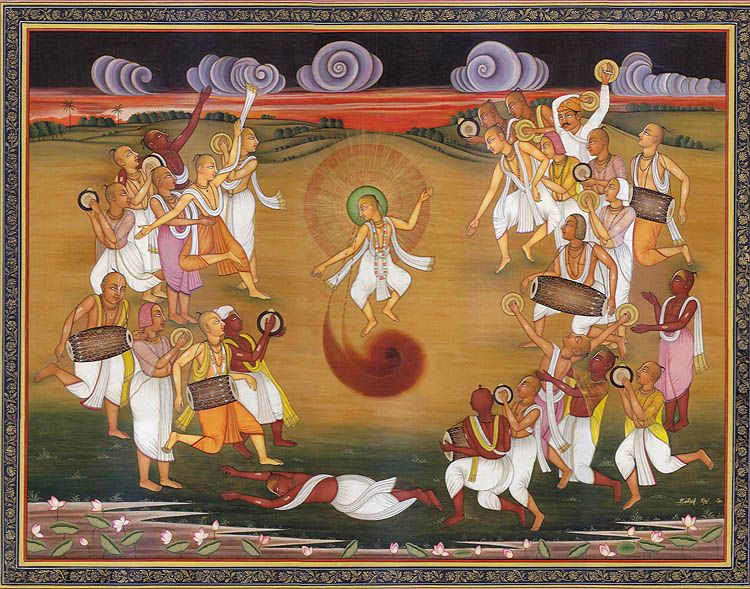
Sri Chaitanya Mahaprabhu leading sankirtana with devotees playing mridangas and karatalas
Sri Chaitanya Mahaprabhu dancing in sankirtana with his devotees — the moment kirtan became a community practice.

Sravanam kirtanam vishnoh smaranam pada-sevanam
archanam vandanam dasyam sakhyam atma-nivedanam

"Hearing and chanting the name of the Divine, remembering, serving, worshipping, praying, offering friendship, surrendering the self — these are the nine forms of devotion."

— Bhagavata Purana 7.5.23

Notice: sravanam (hearing) is listed first, even before chanting. In the bhakti tradition, to listen is already to practice. If you cannot sing, come and hear. The mantras will do their work.

Iti sodashakam namnam
kali-kalmasha-nashanam

"These sixteen names of the Divine dissolve the darkness of the age. No greater way is found in all the Vedas."

— Kali-Santarana Upanishad

The Maha Mantra — Hare Krishna Hare Krishna, Krishna Krishna Hare Hare, Hare Rama Hare Rama, Rama Rama Hare Hare — is offered as a way through the confusion of our age. A rope of sound to hold onto when the world spins fast.

Harer nama harer nama harer namaiva kevalam
kalau nasty eva nasty eva nasty eva gatir anyatha

"The name of the Divine, the name of the Divine, the name of the Divine alone — in this age there is no other way, no other way, no other way."

— Brihan-Naradiya Purana, taught by Sri Chaitanya

Sri Chaitanya Mahaprabhu, in sixteenth-century Bengal, took kirtan from the temple into the streets. His teaching: in a time of chaos, the collective voice singing the sacred name is the medicine. The community becomes the healing.

The Science of Sound

What Modern
Research Shows

The yogic tradition understood kirtan's effects for thousands of years. Modern research is beginning to catch up. Here is some of what has been studied.

Slows the Breath

Chanting mantras naturally slows breathing toward six breaths per minute, activating the parasympathetic nervous system and synchronizing cardiovascular rhythms.

Bernardi L, Sleight P, et al. "Effect of rosary prayer and yoga mantras on autonomic cardiovascular rhythms." BMJ. 2001;323(7327):1446-9.

Releases Bonding Hormones

Group singing has been shown to release endorphins and oxytocin, the hormone associated with bonding and deep human connection. Heart rates of singers begin to synchronize.

Kreutz G et al. "Effects of choir singing on secretory immunoglobulin A, cortisol, and emotional state." Journal of Behavioral Medicine. 2004. Vickhoff B et al. "Music structure determines heart rate variability of singers." Frontiers in Psychology. 2013.

Supports Cellular Health

A UCLA study on Kirtan Kriya, a 12-minute daily chanting meditation, showed a 43% increase in telomerase activity, the enzyme associated with cellular longevity.

Lavretsky H, Epel ES, Siddarth P, et al. "A pilot study of yogic meditation for family dementia caregivers with depressive symptoms." International Journal of Geriatric Psychiatry. 2013;28(1):57-65.

Sound is medicine. The tradition knew this long before science began to measure it.

Come As You Are

What To Expect

No experience needed. No preparation required. Only these things.

A Lineage of Sound

Older Than
Any Of Us

When we chant a mantra, we join a lineage that reaches back thousands of years. The sounds we make have been shaped by every voice that has ever sung them. That's why the tradition says the mantras carry their own power. We're not making them work. We're joining them, and they carry us.

The harmonium keeps the drone. The drum keeps the pulse. The voice keeps the intention. Together, they form a container that lets the mind rest for a while inside something older than the mind.

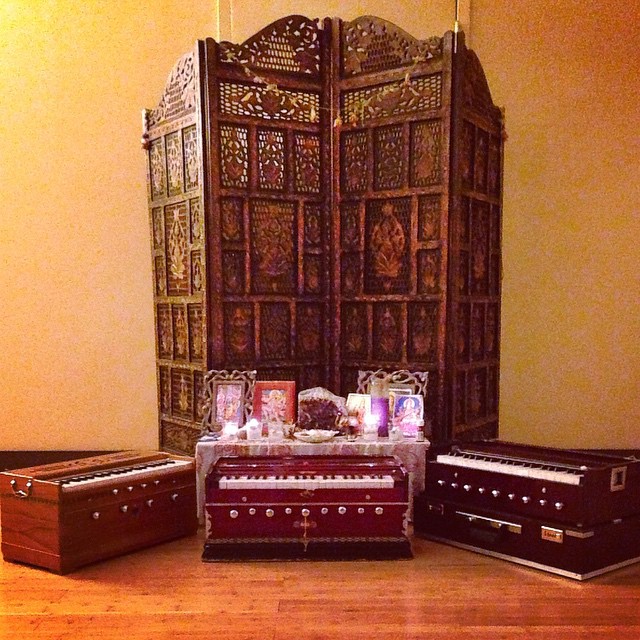
Harmoniums and altar at Revolution Yoga
Evolve Like You — All are welcome
ALL COLORS|RACES|AGES|GENDERS|RELIGIONS|ABILITIES|SIZES|CULTURES|PEOPLE|WELCOME
Join The Circle

Come Sing
With Us

Bring your voice. Bring your friends. Bring your quiet.

Monthly kirtan is back at Revolution Yoga, third Saturday of each month. See upcoming dates and other gatherings on the workshops calendar. Or reach out with any questions.

See Kirtan Dates Ask A Question