Restorative yoga vs yin yoga is one of the most common mix-ups I hear about. On paper they sound alike. Both are slow. Both are mostly on the floor. Both hold poses for a long time. But if you’ve ever taken both, you know they feel completely different.
Here’s the simplest way I can put it. Restorative yoga is about being held. Yin yoga is about staying with sensation.
What is restorative yoga?
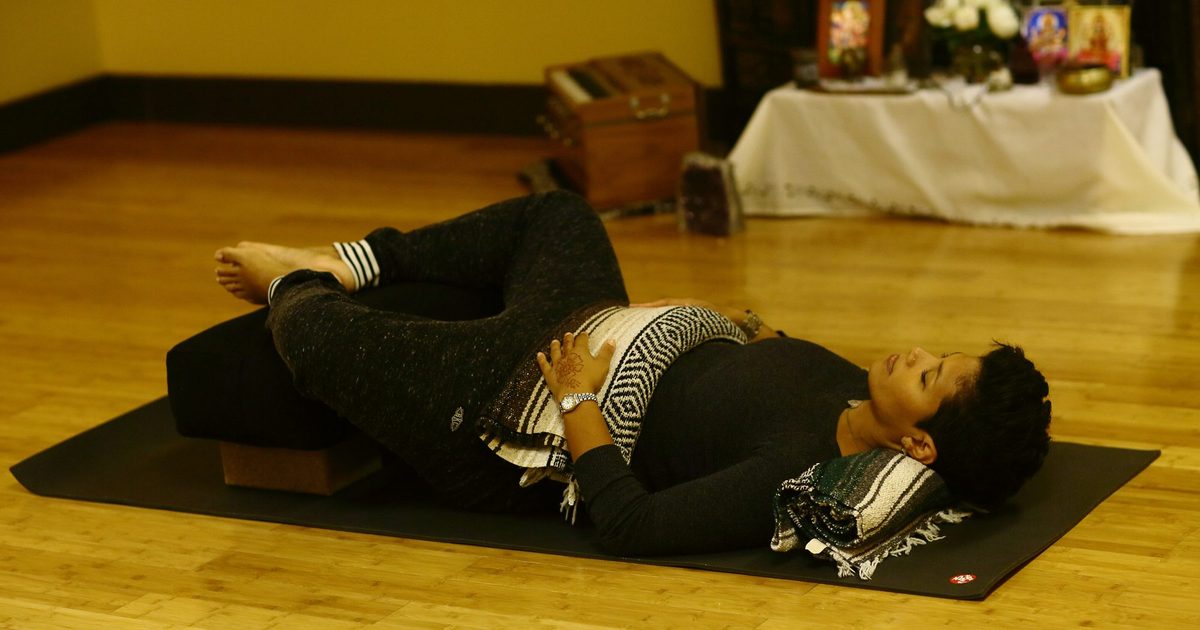
Restorative yoga is a passive practice. You’re set up in poses fully supported by props, like bolsters, blankets, blocks, straps and sandbags, so that your body doesn’t have to do any work. Then you rest there for a long time.
There’s no stretching sensation to chase. If you feel a pull, you add another blanket. The whole point is comfort, so your nervous system can relax and your mind can soften.
At Revolution Yoga, our restorative classes go a step further. During class, you’re guided through relaxation meditation and may receive gentle hands-on adjustments to open the yogic acupressure points (marma). Class ends with yoga nidra, a guided practice sometimes called yogic sleep, which is one of the deepest relaxation practices in our tradition.
On our class menu, restorative is marked with a cloud: slow, still and restful. No exertion at all.
What is yin yoga?
Yin yoga is slow and meditative too, but it isn’t passive in the same way. Poses are held for several minutes at a time, and while you use props, you’re meant to feel a gentle, steady stretch.
Where faster, flowing yoga works mostly with muscle, yin targets connective tissue like the fascia, joints and ligaments. These deeper layers respond to long, patient holds rather than quick movement.
That’s why we give our Hatha and Yin class two peppers on our menu. It looks gentle from the outside, but staying in a long hold, breathing through the sensation without fidgeting, can be surprisingly demanding. It builds a kind of inner resilience. As we like to say, stillness reveals what movement hides.
The main differences between restorative and yin
Effort. Restorative asks for no effort. Yin asks for a quiet, steady kind of effort.
Sensation. In restorative, you should feel comfortable and supported, with little to no stretch. In yin, you’re meant to feel a stretch, at a moderate level you can stay with.
Props. Both use props. In restorative, props hold you up completely. In yin, props help you find the right amount of intensity.
Focus. Restorative is focused on deep rest and calming the nervous system. Yin is focused on connective tissue, flexibility, joint health and building patience with discomfort.
How you feel after. People often leave restorative feeling like they just had a long nap. People often leave yin feeling open, a little tender and very grounded.
Who restorative yoga is best for
Restorative is a beautiful choice if you’re dealing with stress, burnout or a nervous system that won’t turn off. It’s also great for winding down at the end of the week, recovering after a hard stretch of life, or simply learning how to rest. Many students tell us it helps them sleep better.
It’s welcoming for every level. You don’t need any experience. You just need a willingness to be still.
Who yin yoga is best for
Yin is excellent for athletes, runners and anyone with chronic tightness. It’s also wonderful for people who want to go deeper in meditation, because it anchors your attention in your body. If you’re comfortable with stillness and want to work on flexibility and joint health, yin is a great fit.
If you have an injury, joint condition or hypermobility, talk to your teacher first. Long holds aren’t right for every body, and your teacher can help you adjust.
Can you do both?
Yes, and I’d encourage it. They balance each other beautifully, and they’re both lovely counterweights to faster, stronger classes. A lot of people take a flow class during the week and then come to restorative or yin to slow down.
Try asking yourself what you need today. If you’re depleted, go restorative. If you’re restless and stiff, try yin. If you’re not sure, restorative is the gentler place to start.
Restorative and yin yoga in Rockville Centre
We offer both at our studio in Rockville Centre. You can read about Revolution Restorative and Revolution Hatha and Yin on our class types page, and find times on our schedule. Many restorative classes are also offered by livestream if you’d like to rest at home.
For our restorative classes, just bring yourself and comfortable layers. We provide mats and every prop. Arrive about 10 minutes early to settle in. If you’re new to Revolution Yoga, use code RESTORE15 at checkout for 15% off your first class, as listed on our restorative yoga page.
And if you fall in love with either practice, we also offer Yin and Restorative teacher trainings for going deeper.
Come lie down with us. You’ve earned it.


