“Is yoga good for back pain?” It might be the question I’ve been asked most in all my years of teaching. Usually it comes with a hand pressed to the lower back and a look that says, “Please tell me there’s something I can do.”
The honest answer: for many people with common, everyday back aches, gentle yoga can be a helpful part of feeling better. But back pain has lots of possible causes, and yoga isn’t right for every one of them. So let’s talk about it carefully.
First, see a doctor about your back pain
Before starting yoga for back pain, check in with your doctor or physical therapist, especially if the pain is new, severe or not getting better. They can help figure out what’s going on and tell you what kinds of movement are safe for you.
Get medical care right away if your back pain comes with any of these:
- Numbness, tingling or weakness in your legs
- Trouble controlling your bladder or bowels
- Fever or unexplained weight loss
- Pain after a fall, accident or injury
- Pain that’s severe, getting worse, or keeping you up at night
Yoga teachers aren’t doctors, and a yoga class isn’t a diagnosis or a treatment. What yoga can offer is a gentle, supportive way to move once you know movement is safe for you.
How yoga may help with back pain
For a lot of common back aches, staying gently active tends to feel better than staying very still. Doctors and physical therapists often recommend some kind of gentle movement for everyday back pain, and yoga is one way to do that.
Here’s what gentle yoga brings to the table:
- Mobility. Slow, easy movement of the spine and hips can help reduce that locked-up, stiff feeling.
- Strength. Gentle work for the legs, glutes and deep core helps support the back.
- Awareness. You start noticing how you sit, stand and lift during the day, and you learn what makes your back feel better or worse.
- Relaxation. Pain and stress feed each other. Breath and rest can help your whole body stop bracing.
Many people find that tight hips and hamstrings, or long hours sitting, play a part in how their back feels. Yoga works on all of it gently.
Gentle yoga poses that often feel good for the back
Only do what feels comfortable, move slowly, and stop if anything increases your pain. Your doctor or physical therapist may have more specific advice for you.
- Cat and cow. On hands and knees, slowly round your back and then let your belly soften down. Small, easy movements with the breath.
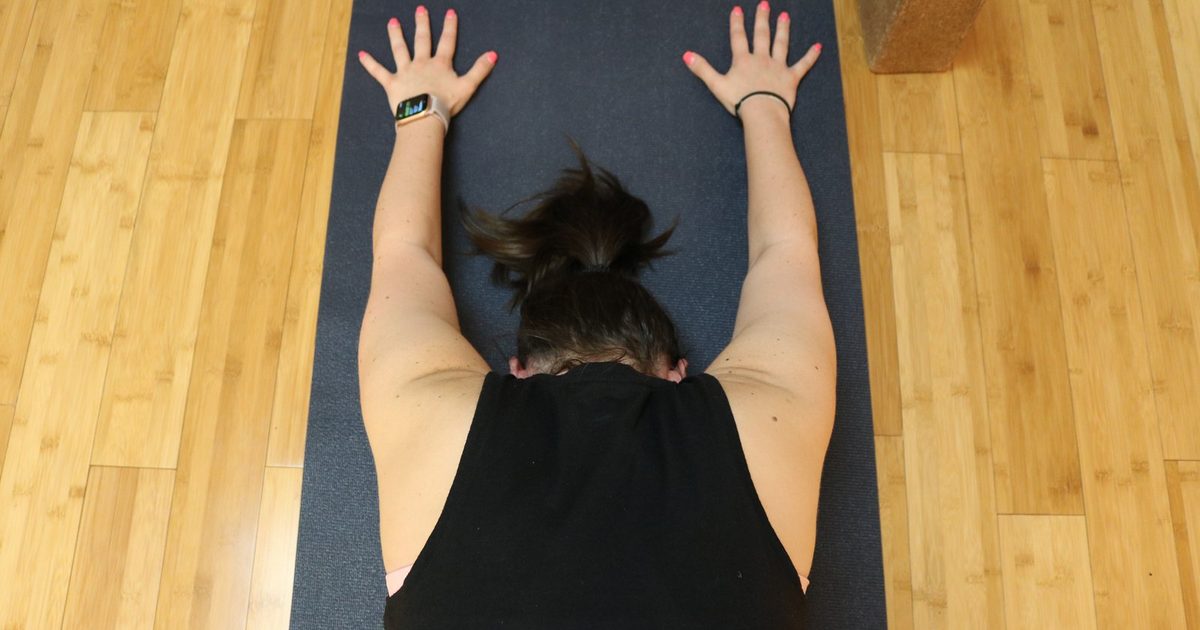
- Child’s pose. Knees wide or together, hips toward heels, forehead resting down. Add a pillow under your chest if that feels better.
- Knees to chest. Lying on your back, hug one or both knees in and rock gently side to side.
- Supported bridge. Lying on your back, knees bent, lift your hips and slide a block or firm cushion under your sacrum. Rest there.
- Gentle reclined twist. On your back, let your bent knees fall to one side. Keep it soft.
- Legs up on a chair. Lie on your back with your calves resting on a chair seat. Many people find this position very comfortable for the lower back.
What to avoid when your back hurts
Again, your healthcare provider’s guidance comes first. In general, when your back is aching:
- Skip deep forward folds with straight legs. Bend your knees generously.
- Go easy on deep twists and big backbends.
- Avoid fast, forceful movement and jumping in and out of poses.
- Don’t push through sharp, shooting or electric pain.
- Don’t compare yourself to anyone else in the room.
The general rule I teach: effort and mild stretch are fine. Pain that’s sharp, pinchy or getting worse is your cue to stop.
Which yoga classes are good for back pain?
Choose gentler classes to start. At our studio:
- Newbies puts a big emphasis on alignment and injury prevention, and walks you through the basic postures one at a time.
- Revolution Gentle Flow includes gentle postures for common tight spots, like the lower back, hips and joints.
- Revolution Restorative offers deep, fully supported rest, which can be lovely when you’re sore and stressed.
You can read more about each on our class types page. Whatever class you take, tell the teacher about your back before class starts. Every Revolution class is sequenced so one pose builds gradually into the next, and our teachers offer modifications for every pose.
Why private yoga can be a good fit for back pain
If you’re nervous about aggravating your back in a group class, a private session may be the best place to start. Your teacher can focus fully on you, learn what your doctor or physical therapist has recommended, and build a practice around what your back likes and doesn’t like. You go at your pace, and you get feedback in real time.
We offer private yoga at our Rockville Centre studio, in your home anywhere in Nassau County and across Long Island (a travel fee applies for in-home sessions and is quoted when you inquire), or online.
Some people also like to pair yoga with hands-on care. Dr. Keith Angrisani, a licensed chiropractor, sees clients at our studio for back and neck pain, stiffness and posture. You can learn about his work on our chiropractic care page.
Be patient with your back
Backs rarely feel better overnight. Be kind to yours. Move gently and often, rest when you need to, and keep your doctor in the loop. Over time, many people find yoga becomes one of the ways they take care of their back for the long run.
If you’d like a practice built around your body, reach out. We’re happy to help.


