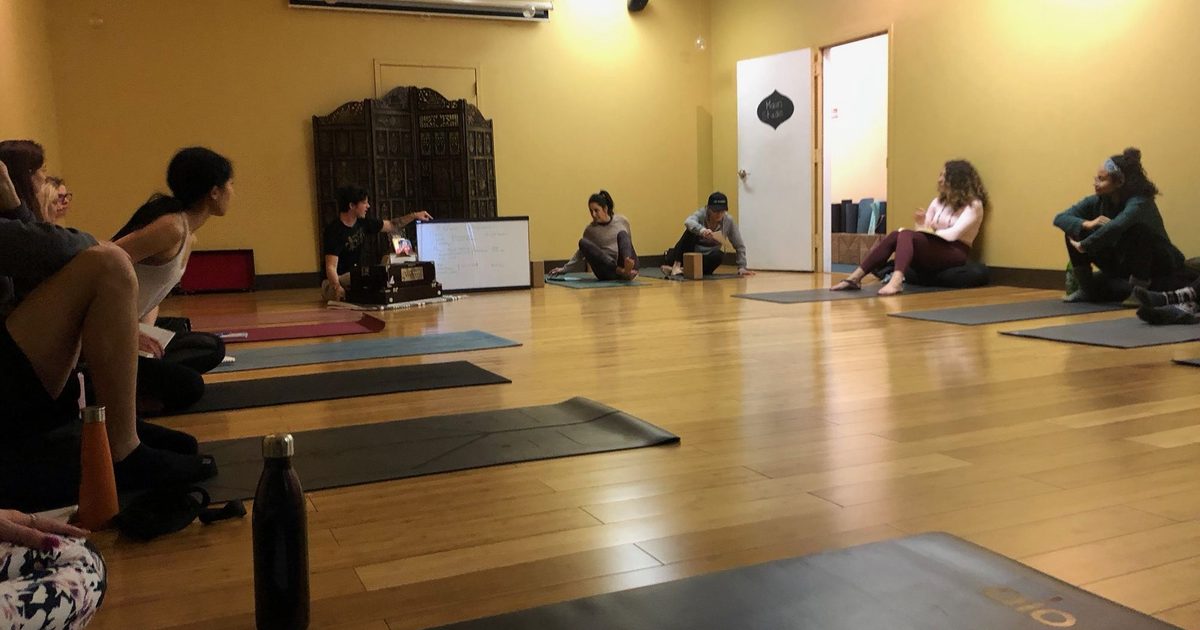
According to the Yoga Sutras, yoga is the control of the fluctuations of the mind. That lotus pose, that handstand, that savasana: it’s all part of it, but it’s not yoga. It’s asana. Asana is one of the eight limbs that make up a yoga practice. In fact, it’s the third limb. Traditionally, you wouldn’t practice in the physical body before you began practicing in the mental body. How can we expect steadiness and comfort in the body when the mind itself has not been restrained? So we begin our journey with the yamas and niyamas, the first two limbs: restraints and observances.
The chariot
The yogis use the analogy of a horse and chariot to describe self-discipline. Imagine the body as the chariot, your wisdom as the charioteer, your mind as the reins, the horses as your senses, and your true self as the passenger. If we seek to control the mind, we can only do it by controlling the senses and having the wisdom to drive the mind in the right direction. A disciplined asana practice serves the body and the true self, but it’s only part of the picture. To fully practice yoga in service of our true self, we must begin by observing and controlling the mind and what we bring into it.
The yamas: restraints
The yamas are restraints, universal values that free us from sense gratification and mental disturbance: ahimsa, satya, asteya, brahmacharya and aparigraha. Nonviolence, truthfulness, non-stealing, moderation of energy and non-hoarding. Much like our physical practice, the more we practice them, the more we find ourselves coming back to them.
Ahimsa, nonviolence. We practice ahimsa by treating those around us with kindness, by restraining aggression and our almost instinctual reactions, and by offering peace and friendliness. On the mat, when we don’t push too far, when we take child’s pose, observe our circumstances and act from kindness, we practice ahimsa.
Satya, truthfulness. Honesty in our words and integrity behind our actions. We observe the effects of our words and actions. We understand the weight of what we do, and we act carefully so the consequences are rooted in truth. When we act with integrity, we encourage those around us to do the same. We build trust, and we find a mind growing clear because it is not filled with lies and deception.
Asteya, non-stealing. A practice of releasing attachment to material desires. We find solace in what we have, and by restraining greed we release our cravings and addictions to sense gratification. We find peace where we are, regardless of circumstance. We don’t take credit, borrow ideas or rob, because everything we need is where we are.
Brahmacharya, moderation of energy. Brahmacharya gets a bad rap. It is traditionally translated as abstinence, but think of it as abstinence from overexertion: the practice of not pushing yourself too far, of not indulging every desire, and of finding your true nature as you gain mastery over the pull of sensory pleasure.
Aparigraha, non-hoarding. Aparigraha releases our attachment to material and mental bondage. We often hold onto memories, ideals, keepsakes and mementos. Subconsciously, this creates patterns of wanting. The more we want, the more we are bound. When we release the desire to receive, we can rest in what we have. When we are given gifts or memories, we appreciate them for what they are and lose the tendency to seek more. The yogis even say we take birth again and again because of our addiction to material life.
The niyamas: observances
The niyamas are observances that deepen our relationship with ourselves and the world around us. They build discipline and foster virtuous action, and thereby a virtuous life. While the yamas help us develop discernment, the niyamas deepen our practice of taming the monkey mind: saucha, santosha, tapas, svadhyaya and ishvara pranidhana. Purity, contentment, discipline, self-study and surrender to the divine.
Saucha, purity. At first glance, cleanliness seems simple enough. Saucha does mean honoring the body as the temple, the chariot of the true self, but the practice goes deeper. We practice purity of thought and action. By creating habits of pure words and thoughts and a pure body, the true self is no longer masked by colored thoughts and pain. Rather than seeking gratification, we seek the freedom that comes with mastery of the senses, and the contentment that follows.
Santosha, contentment. Contentment easily follows the yogi who practices purity. Like the yamas, santosha is the continued practice of acceptance right where you are. Having established healthy habits like non-stealing and non-greed, we find equanimity in ourselves, in others and in our practice. Contentment doesn’t stop us from practicing; it removes the craving for perceived success. When the pose you perfected last week is out of reach today, modify and adjust, not only the body but the mind. The habits we create on the mat are the habits we take off the mat.
Tapas, discipline. Tapas is often described as heat, the burning away of impurities. Tapas is practice. Tapas is discipline. Tapas is discernment. This is where we return to the uncomfortable, sometimes painful, over and over again. By confronting and modifying behaviors we are normally averse to, we create new patterns. We take avoidance and transform it. We take reluctance and find ease. We breathe deeper, we explore. We find faith in something beyond the body and mind that lets us return to our practice again and again.
Svadhyaya, self-study. Self-reflection is only truly possible once the self we’re studying has been refined by continued practice of the yamas and niyamas. Without them, an aspiring yogi practicing svadhyaya may end up studying “a mother,” “a lawyer,” “an athlete” or some other label the mind creates when it assumes the true self is the material self. But through reflection on the yamas, introspection about our own behavior, and the guidance of our teachers and their teachers, scripture and faith, we uncover the true self: the soul sitting as passenger, undisturbed by the desires of the senses, with divine wisdom guiding the mind.
Ishvara pranidhana, surrender to the divine. Through the yamas and the other niyamas, we build practices, refine the mind and find equanimity. Then we can practice surrender. Divinity is not meant to scare anyone or impose a definition of God. Through non-attachment we have already begun releasing fixed associations and definitions. We understand divinity, the universe, as it applies to us. Whether your practice leads you to surrender to your higher self, God, the universe or the unknown, this practice seats us humbly in our true nature. When our focus, our drishti, our intention is rooted in faith in something larger that we are part of, we take ourselves out of the center. The big “I” falls away as we see our thoughts, actions and behaviors as material, as separate. We realize that our connection, our unity, our self does not rest in the physical body or mind, but in surrender to our own individual divinity.
Practice the practice
So when the holidays get the best of you, when you miss practicing with your favorite teacher, when all that’s on your mind in chair pose is how soon it will be over, when you’re frustrated in traffic, when you see anger in another, when you make a mistake, when you act from reaction rather than heart, when you find yourself criticizing and judging yourself and others, when you just can’t: you practice.
Practice on the mat. Practice in the car. Practice on the phone with the story you’ve heard 20 times before. Practice patience with strangers. Practice compassion with enemies. Practice protection and preservation with yourself. Practice forgiveness. Practice laughing. Practice letting go. Practice with your expectations, your desires and your sadness. When you’re comfortable, keep practicing. Practice coming back, again and again.
Practice the practice.